
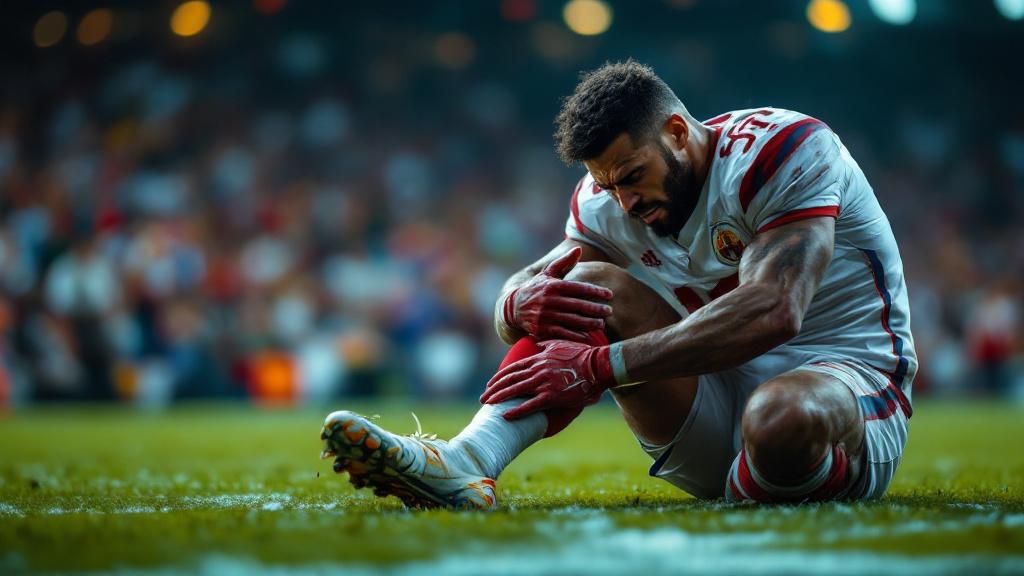
Phil Foden’s World Cup audition concluded disappointingly at Wembley on Tuesday night, with the Manchester City forward producing a peripheral performance in England’s 1-1 draw against Uruguay. The 25-year-old, handed a golden opportunity to stake his claim for a fiercely competitive number 10 position ahead of Chelsea’s Cole Palmer, failed to make any significant impact against Marcelo Bielsa’s uncompromising side. To make matters worse, Foden suffered a painful ankle injury after a reckless challenge by Uruguay defender Ronald Araujo that went without punishment by the referee. With head coach Thomas Tuchel finalising his World Cup selection, Foden’s struggling performance may well have cost him a crucial chance to push himself to the forefront of selection considerations.
A Tough Evening for Foden
Foden was notably subdued throughout the encounter at Wembley, finding it difficult to make an impact on a match that offered little in the way of creative flourish. Playing in his preferred number 10 role, the City forward found himself operating in an overcrowded midfield, often dropping deeper in search of space but achieving scant returns. Head coach Tuchel recognised the challenges, noting that whilst Foden had been positioned specifically to counter Uruguay’s dynamic midfield approach, he could have been more adventurous and taken greater risks in his play. The reality was that Foden’s influence never materialised, leaving doubts surrounding his World Cup prospects.
The contrast became starkly apparent when Cole Palmer entered the fray as a substitute, immediately injecting energy and purpose into England’s attacking play. Palmer’s lively cameo saw him fashion opportunities and set up Ben White’s goal with a well-delivered corner, only emphasising how much Foden had struggled to make his mark. For a player of Foden’s considerable talent and trophy-winning pedigree at club level, the performance represented a missed opportunity of the highest order. With Tuchel possessing numerous alternatives in attacking midfield and on the flanks, Foden must now hope for another chance to prove his World Cup credentials|establish his World Cup worth.
- Foden forced to drop deep with minimal impact against Uruguay’s midfield
- Tuchel believed Foden might have shown more adventurous and risk-taking approach
- Palmer’s cameo off the bench underscored the contrast in attacking influence
- Multiple attacking options available to Tuchel for tournament squad planning
Palmer’s Brief Appearance Stands Out
Cole Palmer’s substitute appearance created a striking contrast to Foden’s sluggish performance, introducing precisely the type of attacking thrust that England’s attack had lacked in the opening period. The Chelsea midfielder’s spell on the pitch was marked by intentional running and smart movement, promptly injecting a note of tempo to England’s attacking approach. Palmer created a excellent chance for substitute Dominic Calvert-Lewin, whose baffling miss from close range exemplified England’s finishing woes, before showcasing his dead-ball delivery by creating the assist for Ben White’s equaliser with a precisely weighted corner.
For Tuchel, Palmer’s performance will have provided considerable reassurance as he weighs up his forward alternatives leading into the World Cup. The 22-year-old’s capacity to function competently in brief appearances, alongside his knack for generating openings from open play and static play scenarios, indicates he holds the qualities required to contend for a spot in the team. Whilst Palmer’s substitute appearance prevented any head-to-head evaluation in respect of time on the pitch, his obvious confidence on the world stage and preparedness to embrace gambles stood in sharp relief to Foden’s tentative approach across the game.
A Notable Contrast
The distinction between Foden’s limited involvement and Palmer’s impactful contribution will not have escaped Tuchel’s observation as he finalises his tournament squad. Foden, in spite of his impressive domestic record and proven ability at the highest level, appeared struggling and unable to dominate play, whilst Palmer’s short stint on the pitch showcased the sort of imaginative quality that could prove decisive in tournament football. This telling contrast may well influence Tuchel’s selection thinking, most notably given the competitive nature of the attacking midfield position.
The Busy Number 10 Discussion
The competition for England’s number 10 position has become increasingly fierce under Thomas Tuchel’s tenure, with an embarrassment of attacking riches producing a selection dilemma that few international managers would welcome. Foden’s disappointing showing against Uruguay has only amplified the conversation surrounding who should fill this central position in the team’s formation. With Cole Palmer having demonstrated his credentials during his substitute appearance, and other capable players available across both attacking areas, Tuchel finds himself spoilt for choice in an area where former England coaches have struggled to find consistent solutions.
The difficulty for Foden is that he has historically had trouble locating his best role within England’s strategic setup, often appearing somewhat uncomfortable in the number 10 role despite his clear technical ability and proven track record. His tendency to drift further out or deeper into midfield in search of the ball has sometimes diminished his effectiveness in attacking positions, a characteristic that was evident against Uruguay. With Jude Bellingham commanding the midfield and Palmer offering an attractive alternative with greater positional discipline, Foden’s path to World Cup selection is growing ever tighter. He now confronts a real challenge to persuade Tuchel that he warrants selection in the squad, let alone a place in the starting eleven.
| Player | Current Status |
|---|---|
| Phil Foden | Selection in doubt following poor Uruguay display |
| Cole Palmer | Strengthened World Cup credentials with bright cameo |
| Jude Bellingham | Firmly established in midfield hierarchy |
| Thomas Tuchel | Finalising World Cup squad selection decisions |
| Ronald Araujo | Delivered dangerous challenge on Foden |
Alternative Candidates Stake Their Claim
Whilst Foden’s difficulties dominated the narrative at Wembley, fellow England teammates seized the opportunity to press their case for inclusion in the World Cup squad. Cole Palmer’s lively cameo proved particularly instructive, demonstrating exactly the type of influence Tuchel is pursuing from his attacking midfield players. The Chelsea winger’s willingness to take risks, combined with his capacity to create opportunities for fellow players, offered a marked difference to Foden’s peripheral display. Palmer’s corner kick that resulted in Ben White’s leveller highlighted his adaptability and importance to the manager’s strategy, suggesting he may yet play a key role in the squad selection.
Beyond Palmer’s positive contribution, the friendly against Uruguay provided valuable opportunities for squad periphery members to audition for inclusion. Dominic Calvert-Lewin’s outing as a replacement provided a testament of his presence as an alternative striking option, though his inability to finish a straightforward opportunity from six yards will have disappointed both him and Tuchel. The competitive nature of England’s forward line means that every display carries considerable importance, and players must capitalise on their opportunities when they arise. For some, Wembley proved to be a platform for progression; for others, including Foden, it represented a wasted opportunity.
Maguire’s Surprising Comeback
Harry Maguire’s continued presence in the England setup continues to generate debate amongst fans and experts alike. The Manchester United defender has endured a challenging season at club level, yet Tuchel appears committed to keeping him in the squad framework. His experience and leadership qualities continue to be valuable commodities in international football, especially with England gears up for a World Cup campaign. However, displays like against Uruguay will establish if Maguire can genuinely compete for starting positions or whether he encounters a more peripheral role.
White’s Intricate Return
Ben White’s goal against Uruguay represented a significant moment in his England career, providing a well-timed demonstration of his defensive prowess and set-piece prowess. The Arsenal defender has worked his way back into contention following previous omissions, and his contribution at Wembley shows that Tuchel values his qualities. However, White’s journey to regular inclusion has been complicated by fierce competition in the defensive ranks. His ability to maintain this form and consistency will prove crucial as Tuchel finalises his World Cup preparations and decides which defenders merit inclusion.
The Way Ahead for Tuchel
Thomas Tuchel tackles a intricate puzzle as he narrows down his World Cup squad, with performances such as Foden’s underwhelming display at Wembley necessitating tough choices. The England manager must weigh loyalty with realism, weighing the credentials of proven players against new challengers who are eager to demonstrate themselves on the grandest stage. With the tournament fast approaching, each friendly fixture becomes ever more significant, and Tuchel’s selections will speak volumes about his strategic vision and the performers he truly trusts can secure triumph. The opportunity to experiment is rapidly closing, and the manager must quickly settle on his key squad.
Foden’s challenge against Uruguay has underscored the overarching challenge facing Tuchel: finding the ideal formula for England’s offensive approach. The surfeit of talent in forward areas is a advantage, yet it produces selection complications that no manager truly welcomes. With Cole Palmer demonstrating his abilities and other contenders standing by, Tuchel must establish which players most effectively support his tactical vision. The upcoming international window will probably be decisive, providing final occasions for squad periphery players to make their case before the squad is completed and England’s World Cup aspirations are fully revealed.
